
How Commercial Construction Contractors Help Businesses Stay on Budget and on Schedule
In the world of commercial construction, businesses often face challenges in maintaining their budget and schedule. This article explores the vital role played by commercial construction contractors in ensuring that projects remain financially feasible and are completed on time. By providing expertise, strategic planning, and innovative solutions, contractors become indispensable partners in the construction process.
Understanding the Role of Construction Contractors
Commercial construction contractors are crucial to the success of any business-oriented project. Their responsibilities go beyond basic construction tasks; they manage the complexities of contracts, budgets, and schedules while ensuring that quality standards are met. These contractors serve as the main point of contact for clients, offering a central coordination role in projects that involve numerous stakeholders.
One cannot underestimate the importance of having a skilled project manager in a commercial construction environment. Contractors are instrumental in project management, overseeing the entire timeline and ensuring each phase advances as planned. This requires constant communication, adjustments, and a firm grip on the project's trajectory to avoid delays.
When compared to residential construction, commercial projects usually involve more extensive planning and a higher degree of complexity. They require specialized skills to handle larger-scale resources and more stringent regulatory requirements. Commercial construction contractors bring expertise in navigating these challenges, employing industry best practices and compliances to manage the workflow efficiently.
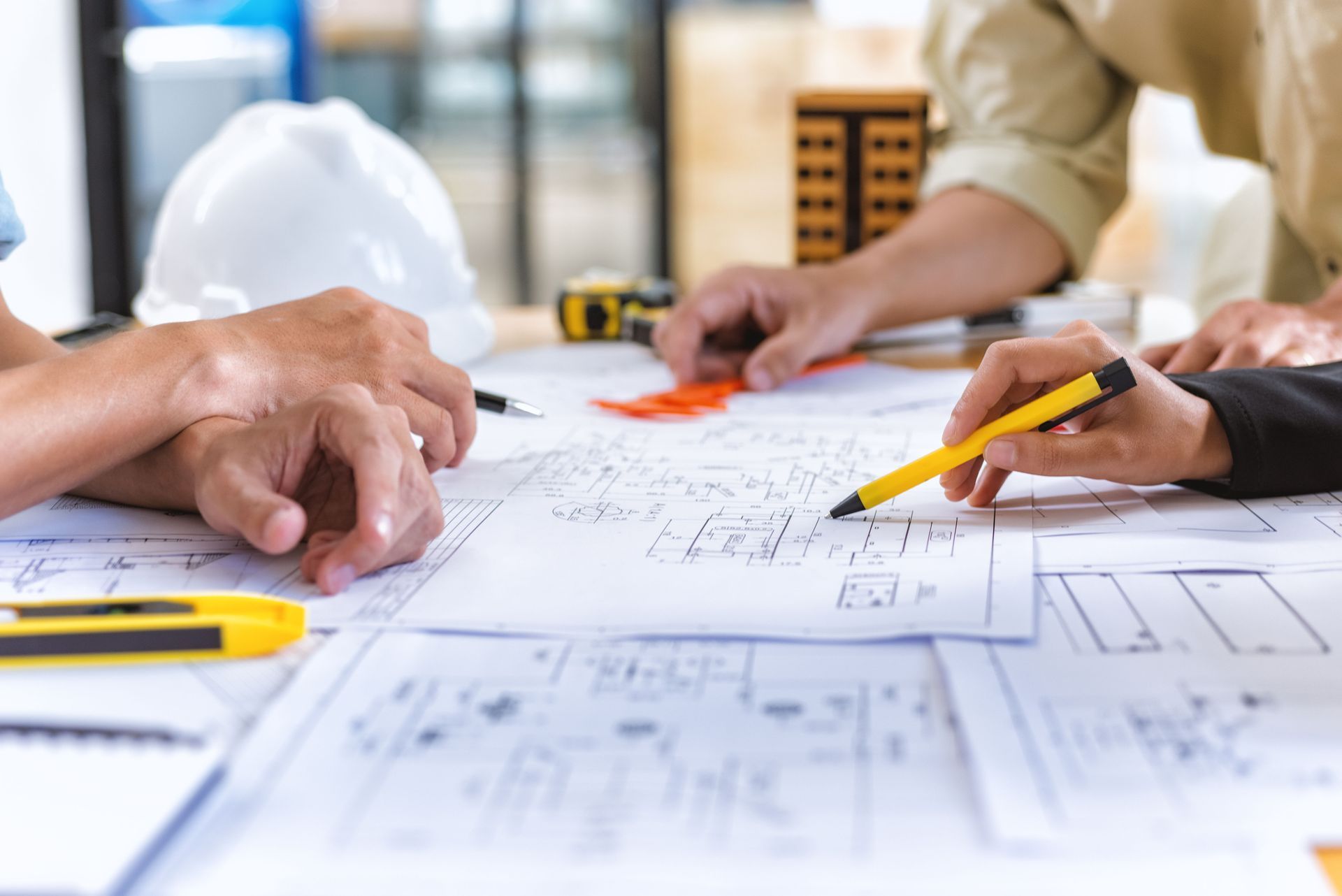
Essential skills and expertise required for commercial construction contractors include in-depth knowledge of building codes, excellent problem-solving skills, and the ability to interpret architect and engineering plans. Contractors must also have strong leadership qualities to direct the subcontractors and ensure collaboration across all aspects of the project. This leadership is crucial to handling unexpected issues that can emerge during construction.
Compliance with industry regulations and standards is non-negotiable for commercial contractors. They're well-versed in adhering to safety protocols, federal and state building regulations, and environmental laws. Being able to adapt to these regulations ensures not only the safety and legality of a project but also its sustainability and efficiency.
Planning and Managing Construction Projects
Initial project assessment and feasibility studies form the cornerstone of strategic planning. Contractors analyze all aspects of a project, from potential risks to resource allocation, to determine its viability. They ensure that there is a clear understanding of the project's objectives, driving the planning process with precision.
Developing a comprehensive work plan involves allocating tasks in a manner that aligns with the project timeline. Contractors use this plan to break down the project into manageable phases, specifying tasks, timelines, and necessary resources. This organized approach helps to keep the project on schedule, reducing delays stemming from poor planning.
Effective time management practices are key strategies employed by contractors to ensure timely project delivery. Simple commercial construction projects typically take about 4 to 6 months to complete, whereas more complex or larger-scale builds can extend to 8 to 10 months, according to HomeGuide. Techniques such as milestone tracking, regular progress reviews, and adaptive scheduling allow contractors to address potential delays early.
Risk assessment and mitigation strategies are integral parts of strategic planning. Identifying potential risks like weather delays, material shortages, or labor issues early allows commercial construction contractors to develop contingency plans. This proactive approach minimizes disruptions, keeping the project aligned with its original schedule.
The utilization of project management software has transformed traditional processes. These digital tools offer real-time data analytics, document management, and scheduling features that increase efficiency and transparency. Contractors can easily coordinate tasks, update schedules, and track progress, ensuring every project phase advances as planned.
Estimating Costs and Managing Budgets
Accurate cost estimation techniques are the foundation of effective project budgeting. Contractors assess labor, materials, equipment, and other costs to develop financial forecasts. By examining these variables thoroughly, they can provide clients with realistic budgets that minimize financial surprises.
Budget development and management involve constant tracking and adjustments to maintain financial health. Contractors vigilantly monitor expenditures against budgeted amounts, allowing for immediate corrective actions if discrepancies occur. This continuous oversight fosters financial discipline, keeping costs within the allocated budget.
Negotiating vendor and supplier contracts is another critical role of construction contractors. By leveraging their extensive industry relationships, contractors can secure favorable terms, pricing, and delivery schedules. These negotiations contribute significantly to cost savings and the timely availability of resources on-site.
Monitoring job costs involves analyzing and comparing current expenses with budget forecasts. Contractors use detailed reports to track labor, materials, and overhead costs, identifying areas that deviate from the budget. This constant vigilance prevents cost overruns and ensures the budget remains intact.
Adjusting budgets for unforeseen circumstances is an essential aspect of financial planning. Changes in design, market fluctuations, or unexpected site conditions all require budget flexibility. Commercial construction contractors must be adept at reallocating funds and changing priorities to maintain financial stability throughout the project.
Maintaining Quality and Ensuring Compliance
Setting quality standards helps ensure that a project meets client expectations and industry standards. Contractors establish benchmarks for materials, craftsmanship, and processes to maintain a high level of quality. By defining these standards early, they drive consistency and excellence throughout the project.
Regular on-site inspections are vital for quality assurance. Contractors routinely evaluate construction work, addressing potential issues before they escalate. This hands-on approach ensures adherence to quality standards and maintains the project's integrity.
Adhering to legal and safety requirements is paramount in any construction project. Commercial construction contractors are vigilant in implementing safety protocols, training workers, and ensuring legal compliance throughout the build. This diligence not only protects workers but also prevents costly legal disputes and delays.
Incorporating sustainable practices reflects the growing emphasis on environmental responsibility in construction. Contractors integrate eco-friendly designs, materials, and methods to reduce the environmental impact. Such practices conserve resources and promote energy efficiency, supporting long-term sustainability goals.
Managing subcontractor performance is critical to maintaining quality and compliance. Contractors oversee subcontractor activities, providing direction and support to ensure alignment with the project's standards. Effective management fosters collaboration and accountability among all parties involved.
Incorporating Innovative Technologies
Adopting Building Information Modeling (BIM) has revolutionized the construction industry. BIM offers visual insights into project designs, facilitating informed decision-making and collaboration among all stakeholders. Contractors leverage this technology to enhance planning, coordination, and problem-solving.
Implementing automation and robotics streamlines various construction processes. These technologies improve efficiency, reduce manual labor, and minimize human error. Contractors can focus on more strategic tasks, allocate resources effectively, and deliver projects with higher precision.
Incorporating smart building solutions into projects reflects the evolution of modern construction. Sensors, AI, and IoT technologies enable energy efficiency, real-time monitoring, and environmental control. Contractors utilize these advancements to enhance building performance and occupant comfort.
Advancements in construction materials provide new opportunities for innovation. From eco-friendly composites to self-healing concrete, these materials offer improved durability and sustainability. Contractors are continually exploring new options to increase efficiency and support sustainable construction practices.
The role of AI and machine learning is becoming increasingly prominent in construction. These technologies provide predictive insights, automate routine tasks, and optimize decision-making processes. Contractors use AI to analyze data, improve project outcomes, and drive innovation in every phase.
Commercial construction contractors are vital to the success of any business-oriented construction project. Through meticulous planning, efficient budgeting, and innovative solutions, they ensure projects stay on budget and on schedule. By understanding their multifaceted role and leveraging modern technologies, businesses can enhance project outcomes, ensuring lasting success and client satisfaction. Partner with Cherokee Construction Services today to bring expertise, efficiency, and innovation to your next commercial construction project.





Share On: